01
Freimundo
Freimundo
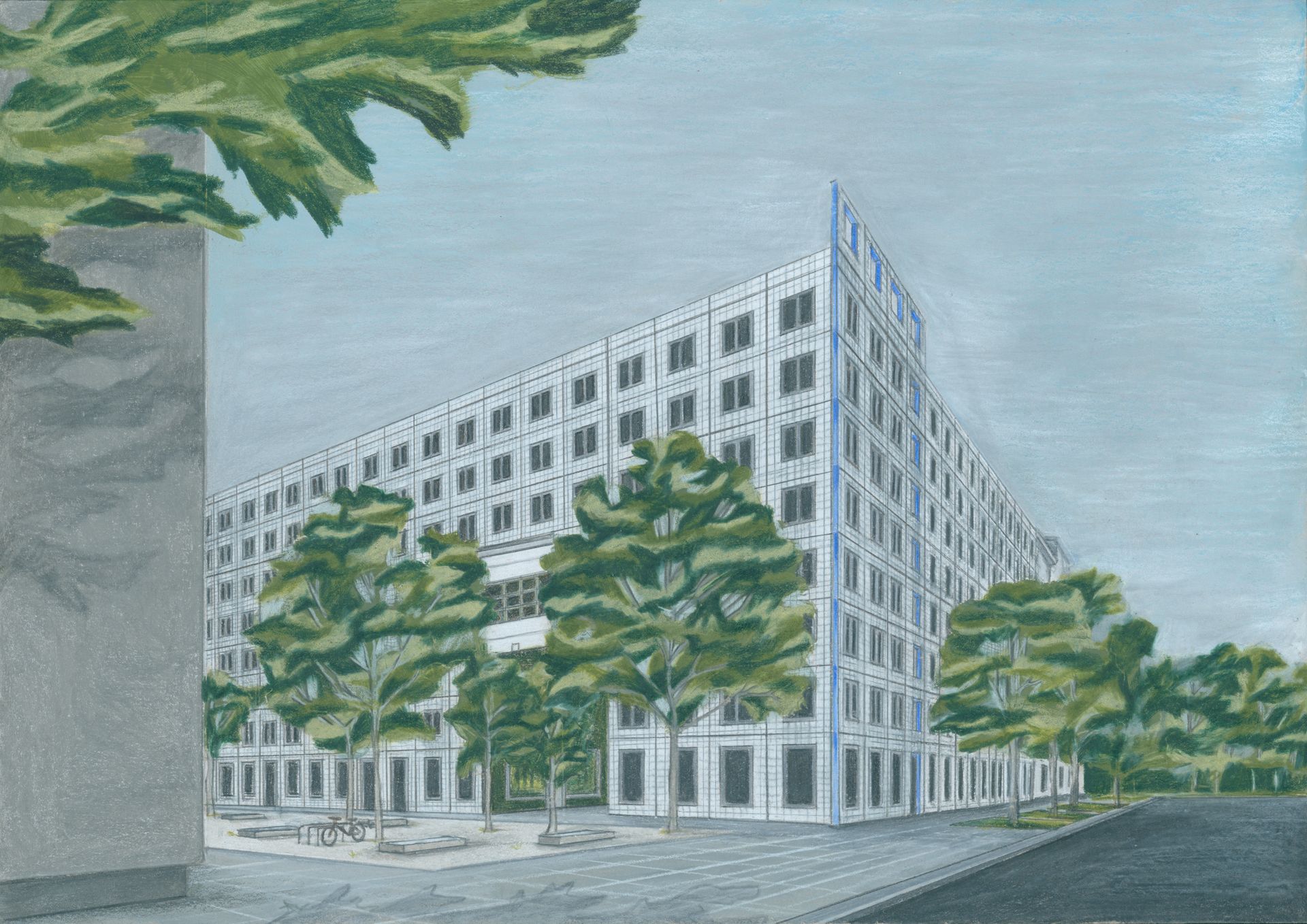
exterior view, 2023. Pencil on paper, 210 × 297 mm
© Stephan Janßen


The House in the City
The gate in the urban fabric has long functioned as a threshold space, a place of anticipation and encounter. It welcomes arriving guests, offers protection, and marks the boundary between inside and outside. Pius IV, the patron, opted for the most economical of the three designs for the Porta Pia drawn by Michelangelo. Here, a residential building with affordable rents is to emerge. Its robust structure, simple cubic form, and cost-efficient façade make this possible. When the rolling gate opens, the scent of freshly prepared food from the comedor drifts through the green alley, and residents and visitors gather for a shared lunch. On warm days, the communal spaces on the ground floor extend into this sheltered outdoor area, and all neighbors understand: the open gate is an invitation to the entire neighborhood.
The Courtyard
The courtyard forms a microcosm of blue and green infrastructure. Water features create a pleasant microclimate, while reflections on the tiled undersides of the access galleries bring additional light into the apartments. During heavy rainfall, the basin in the courtyard expands, allowing rainwater to infiltrate near the surface and creating a habitat for flora and fauna. Have you spotted the hedgehog yet? On warm days, frogs perform their concert beneath strings of lights in the more secluded areas of the courtyard, accessible via small walkways.
Through the natural evaporation of water, temperatures in the courtyard are significantly reduced on hot days, making it several degrees Celsius cooler than the surrounding streets. The gate not only regulates access for visitors but also helps to control the courtyard’s microclimate.
Green Alley & Roof
The green alley becomes a lively fairground, a shared urban space that residents can appropriate and make their own. On the permeable surface, beer benches, toys, and parasols are arranged throughout the day, only to be stored away in the passage like in a cupboard by evening. Groups of trees along the green boulevard create a sense of privacy, reminiscent of front gardens.
Collective life extends beyond the ground floor into the areas around the three stair exits on the roof. Sheltered from the wind, residents gather behind the elevated structure in a summer room above the rooftops. Pathways weave through the solar fields, where energy is generatedconnecting these spaces with one another.
Prefabrication
The façades are flat, quite simple and made in the factory. Industrial production, pragmatism, prefabrication and structural efficiency are embraced and articulated as a clear architectural approach. Affordable rents are thereby made possible. With tiled timber façade elements, prefabrication undergoes a renaissance, moving beyond purely economic constraints through precise architectural responses.
At the prominent volume along the green boulevard, the construction is openly expressed, with windows set flush within the façade. Toward the street, the building presents itself with a pronounced sense of flatness. Within the courtyard, by contrast, the outer planar surface dissolves into a linear system of columns and slabs, offering space for appropriation.
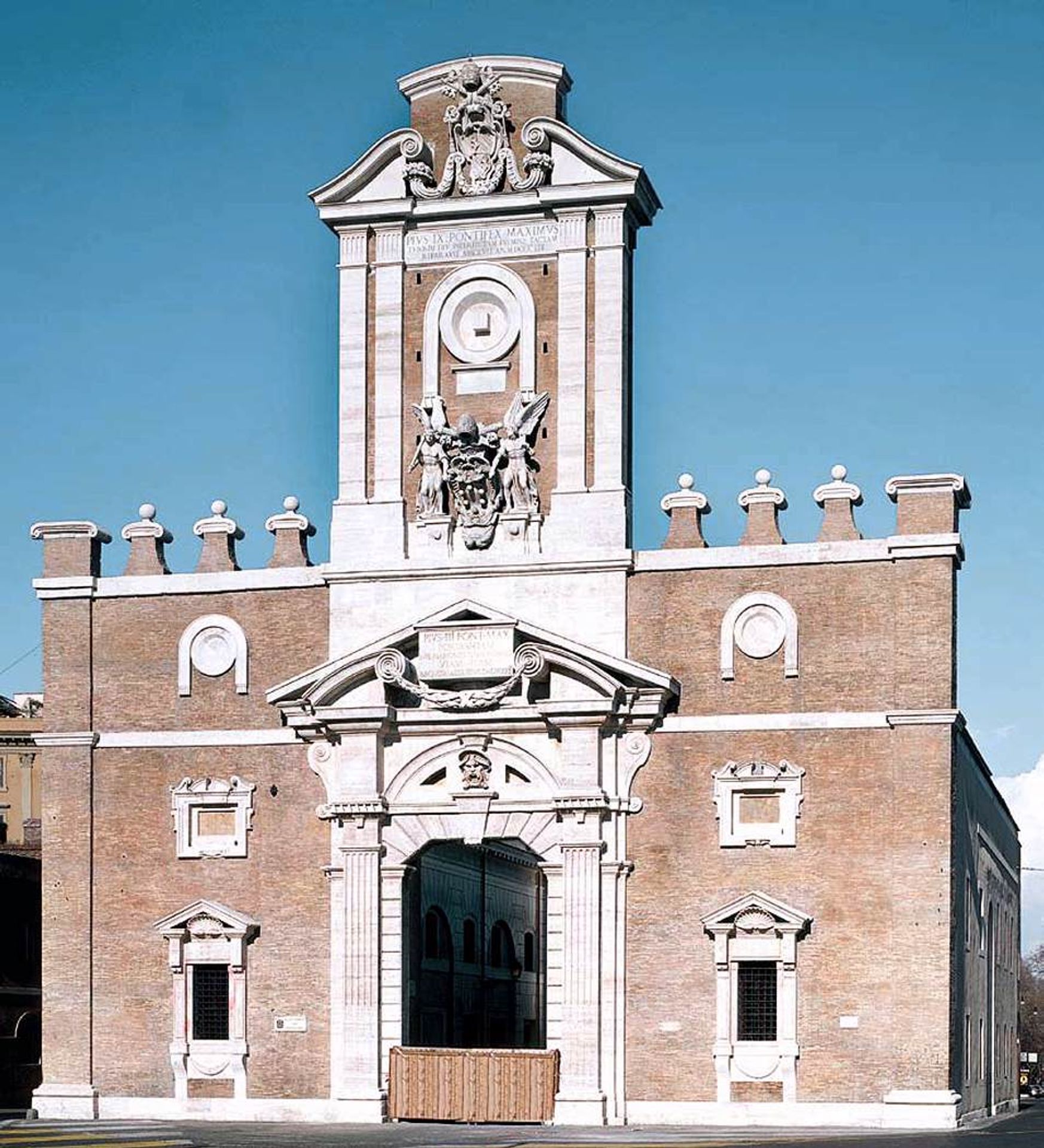
Porta Pia, Michelangelo
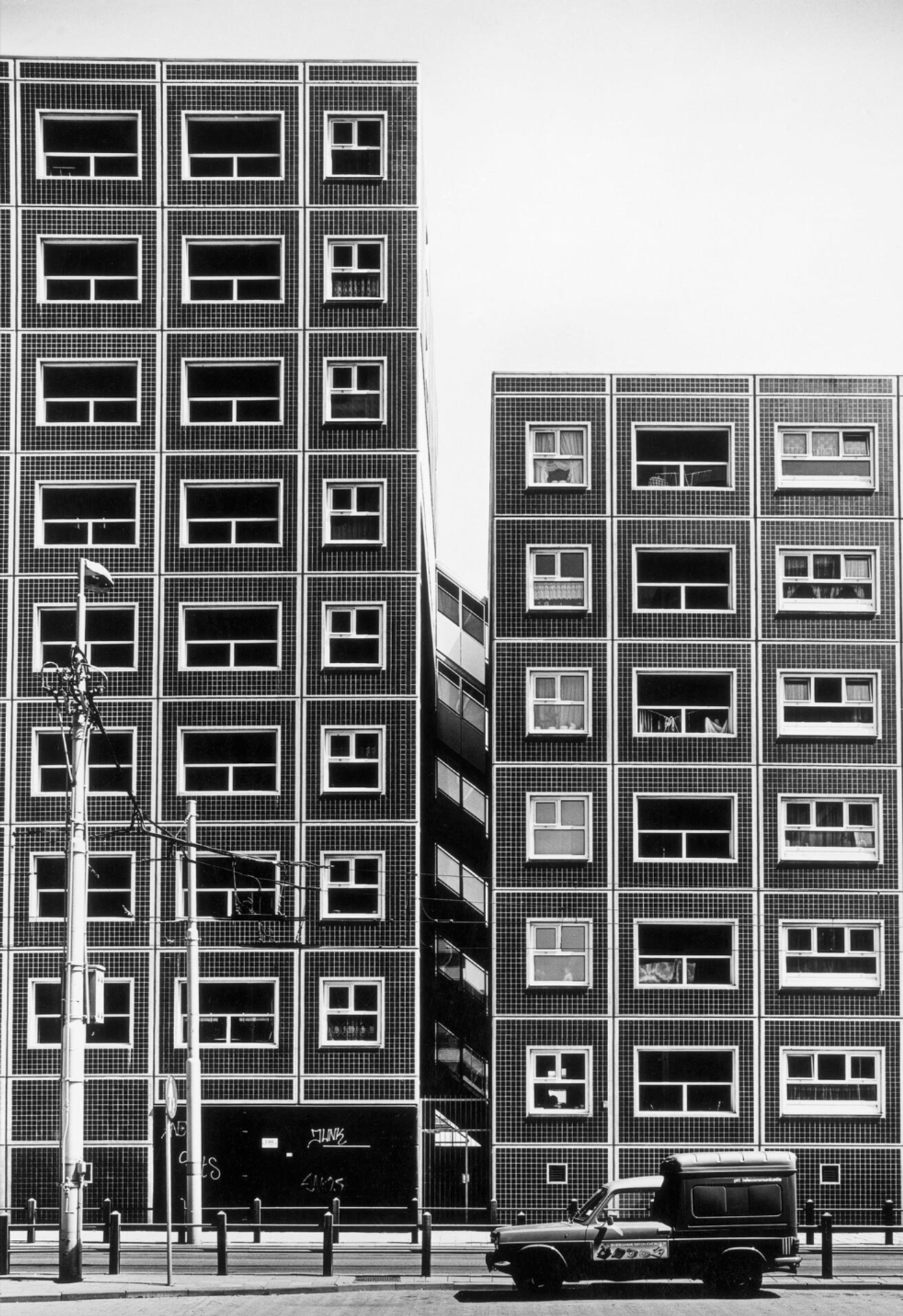
Zwarte Madonna, Carel Weeber
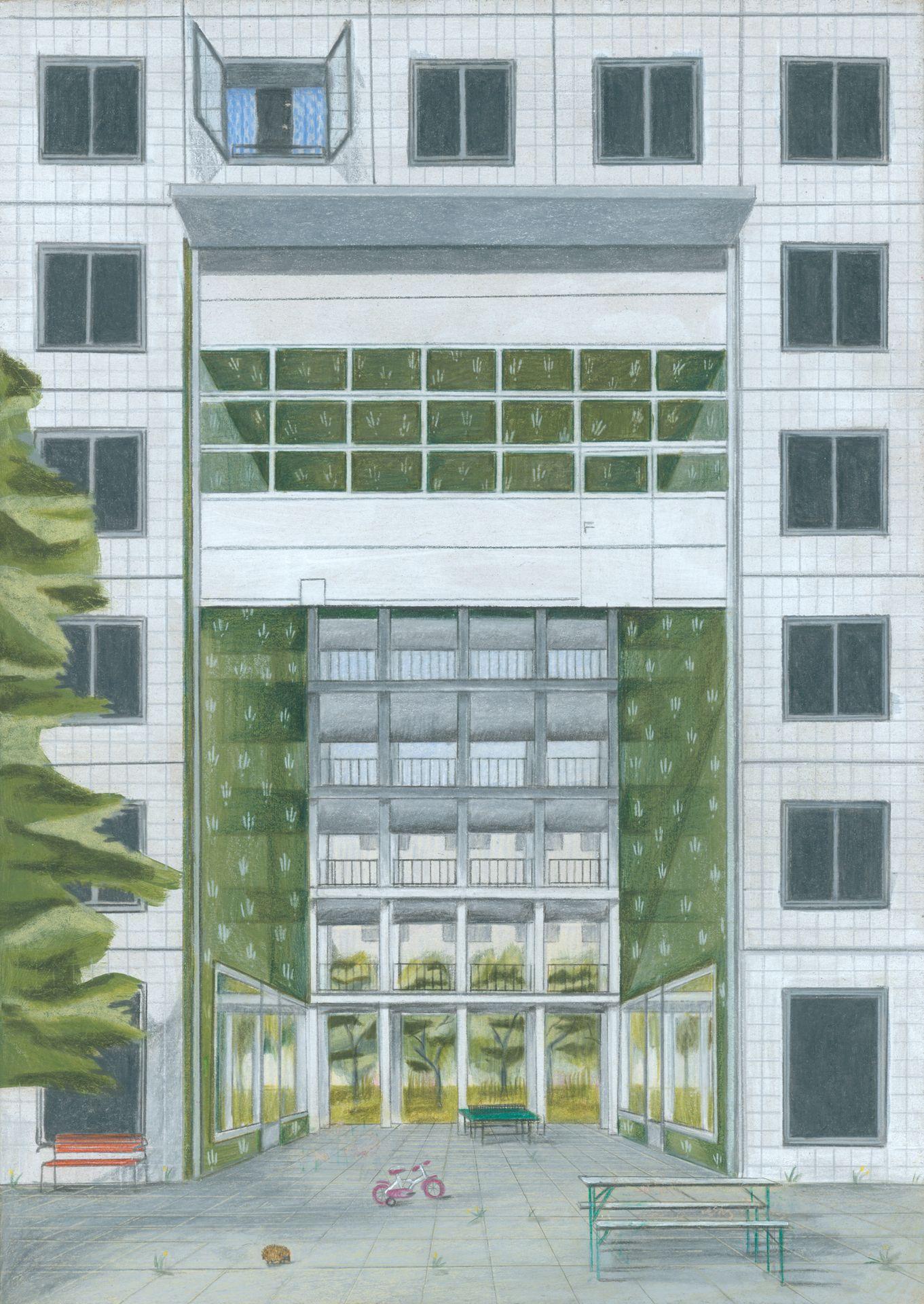
entrance, 2023. Pencil on paper, 210 × 297 mm
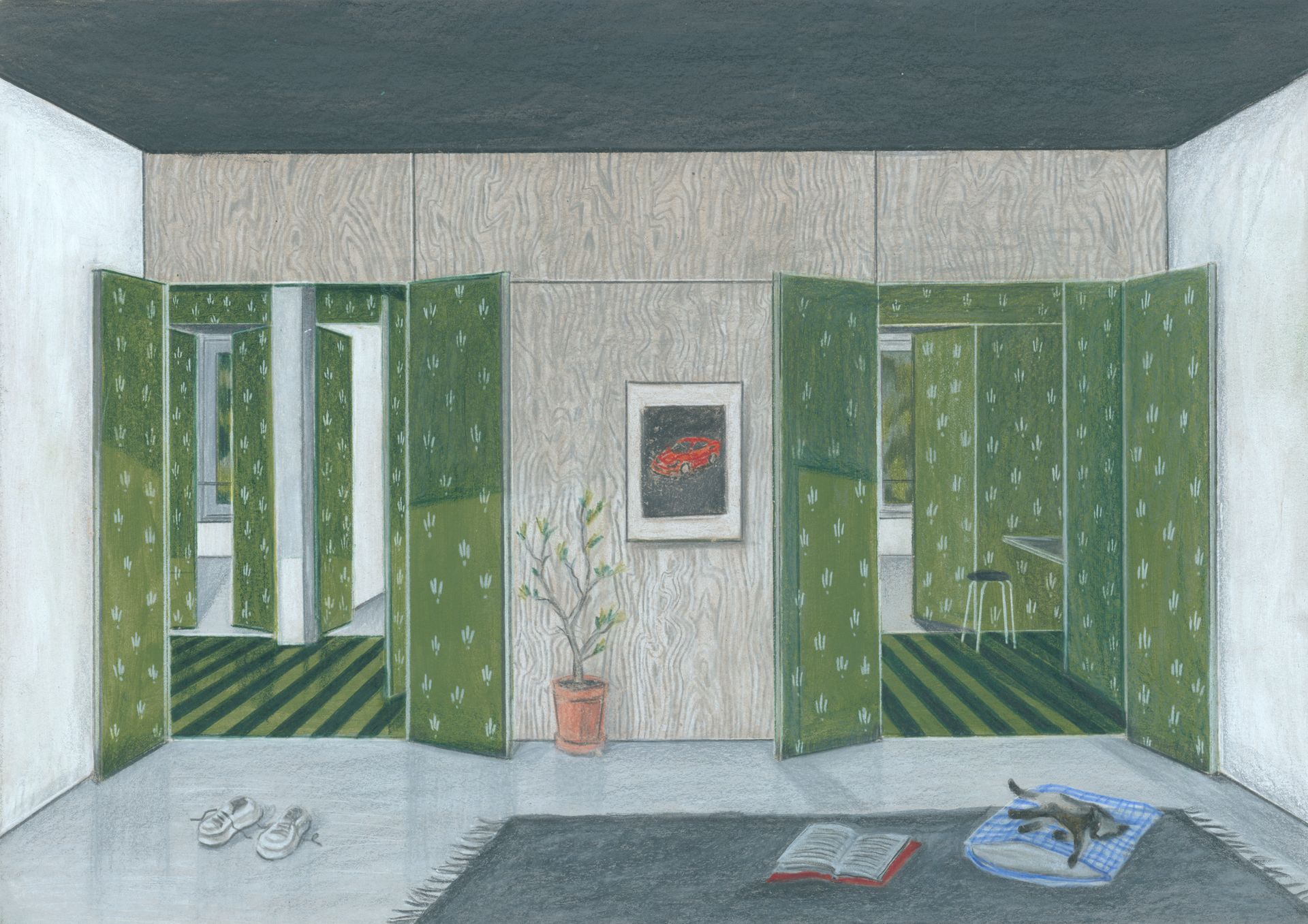
interior view, 2023. Pencil on paper, 210 × 297 mm
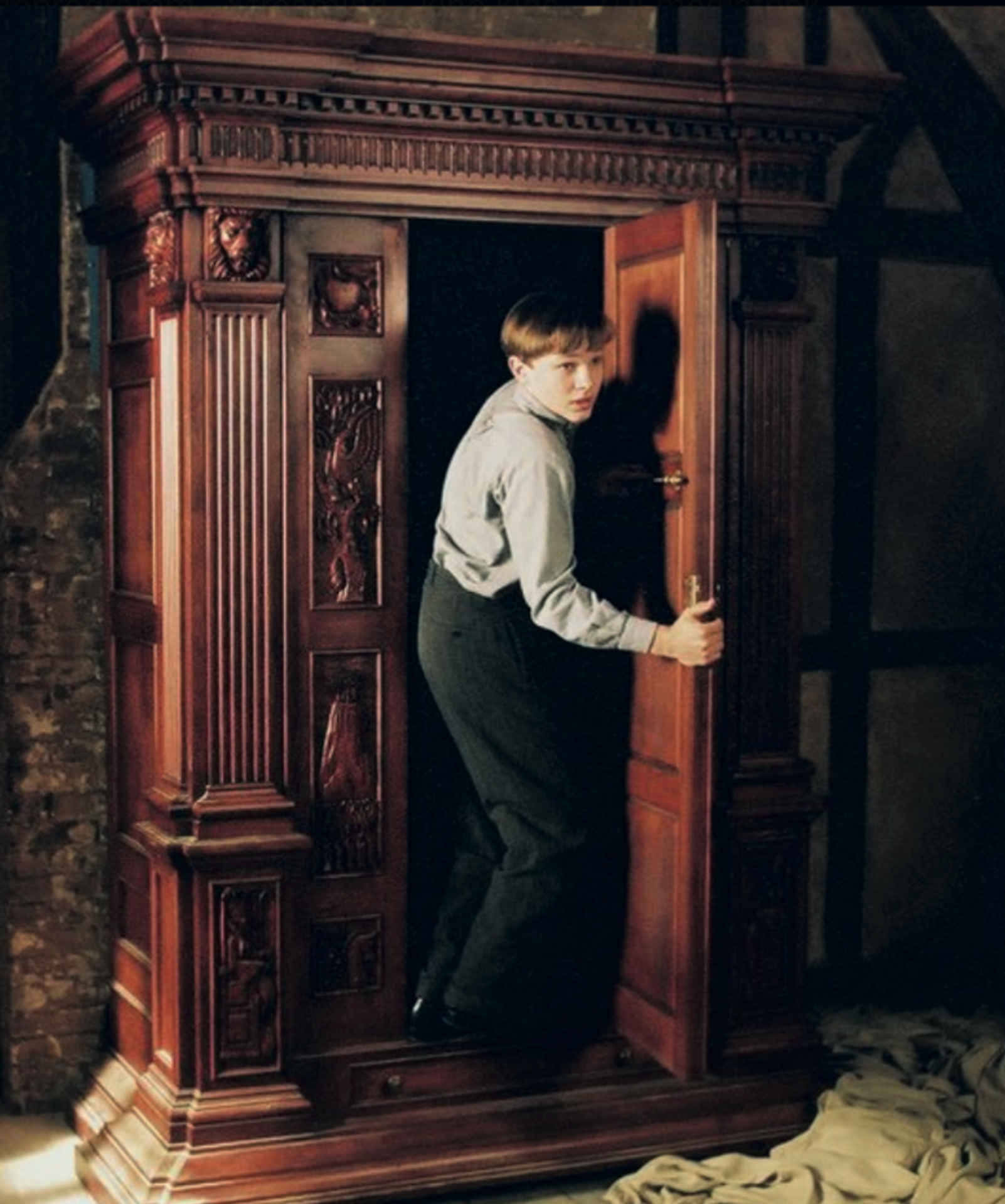
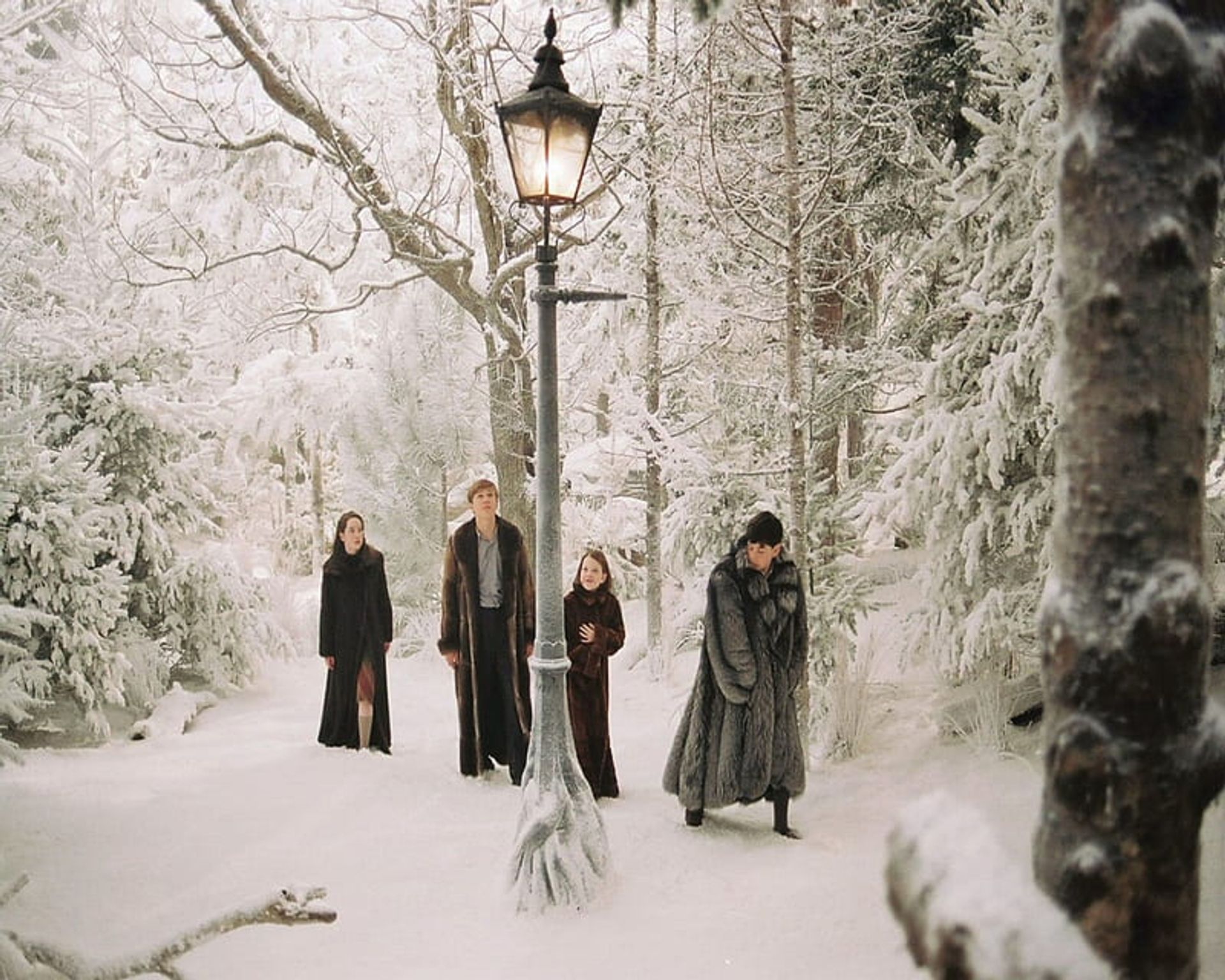
It’s all in the wardrobe!
© 2005 Walt Disney Pictures and Walden Media, LLC
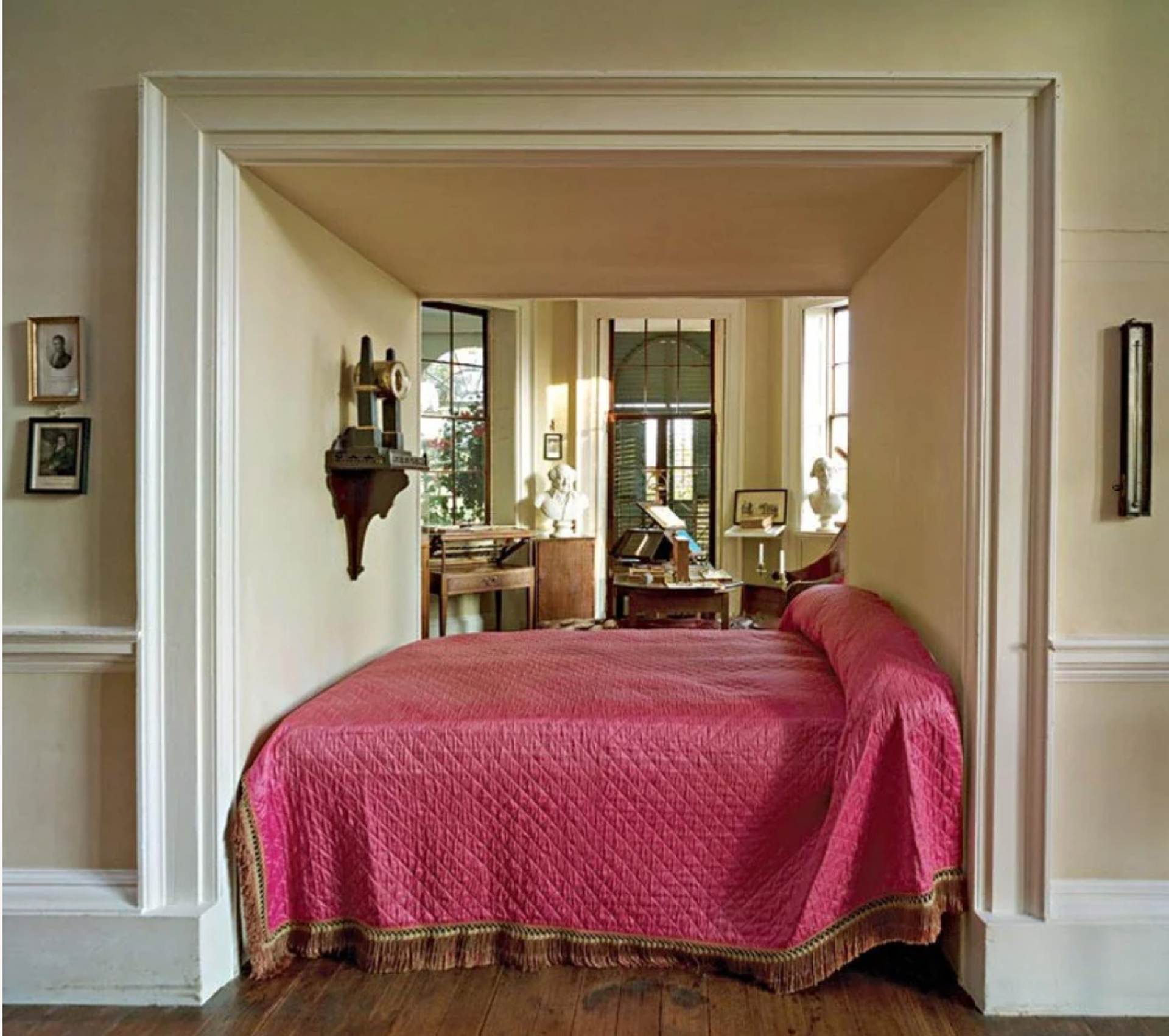
Thomas Jefferson Bed

“breathing” floorplan
„Narnia!
It‘s all in the wardrobe,
just like I told you!“
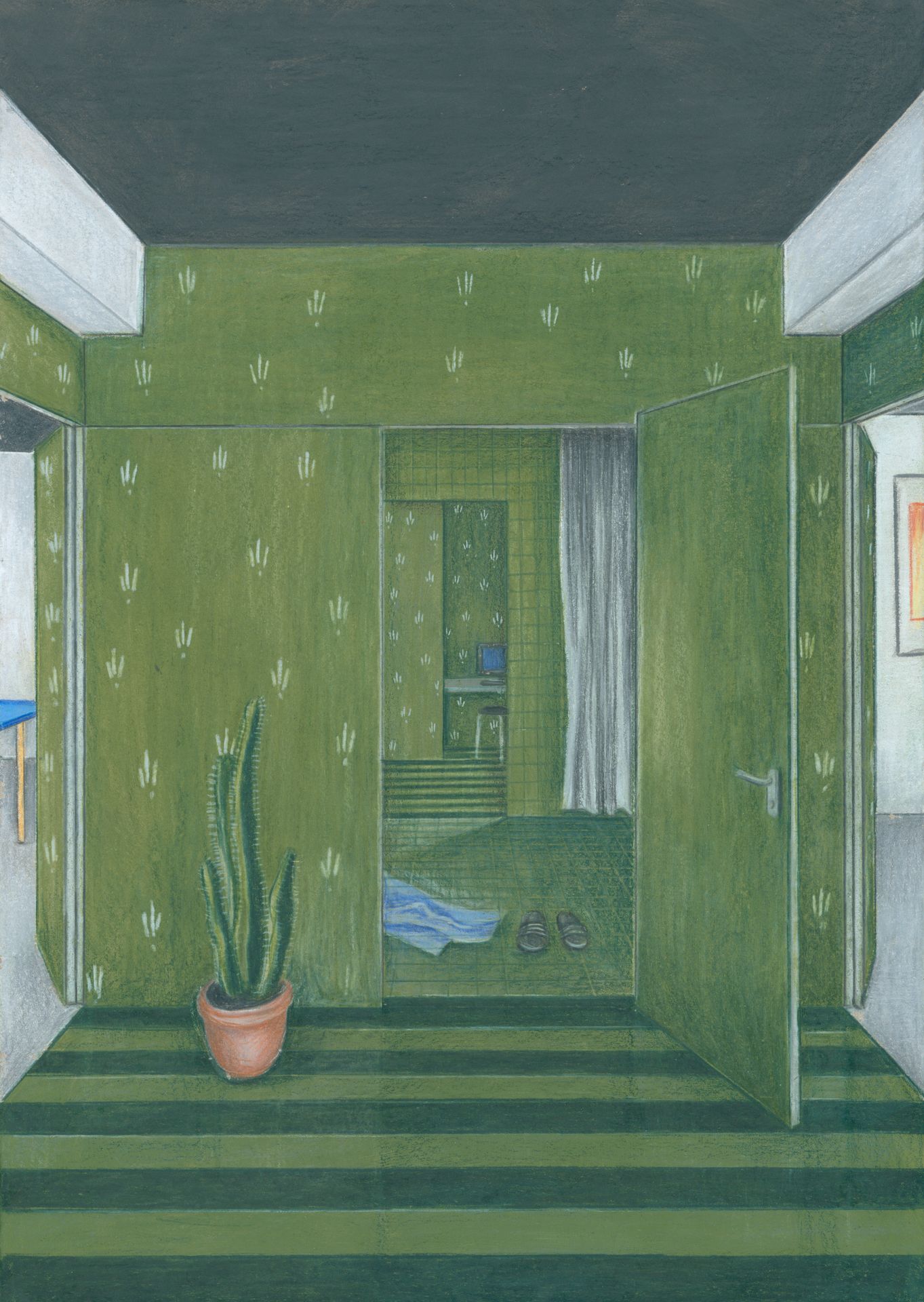
At the heart of every apartment lies the wardrobe to Narnia. When residents seek a retreat from shared living, they leave the collective world through the wardrobe. Beyond it begins a more personal realm: messy children’s rooms, daydreams and night dreams, silence or one’s own music. The wardrobe allows apartments to expand and contract, connects them to the combination rooms, and lets the entire building breathe. It is also a space of in-betweenness: part bathroom, part home office, yet always still a wardrobe. Because “it’s all in the wardrobe, just like it told you.”
Apartment Types & Combi-Rooms.
Which apartment suits your life? Achieving a fair distribution means responding to the subtle urban differences within the site. Based on orientation, the building is structured into narrower sections along the north–south axis and a deeper zone along the east–west axis. The apartment types follow this logic: deeper units to the east, shallower ones to the north and south. In the eastern units, the wardrobe also accommodates the bathrooms. In the smaller apartments arranged to the south, it is correspondingly narrower, allowing for a continuous living space opening toward the south when doors are left open. In the midday sun, the wardrobe catches the light and reflects it into the northern kitchens. The combination rooms are placed at regular intervals between the apartments. They can be accessed from the adjacent units via the wardrobe zone. While the more private rear section can be incorporated into a single apartment, the portion facing the access gallery can also function independently. For residents, it becomes a shared living or working space: a place for the Christmas tree, for celebrations with guests, and during the long holidays for children to build their most elaborate model railways.
It’s all in the wardrobe!
© 2005 Walt Disney Pictures and Walden Media, LLC
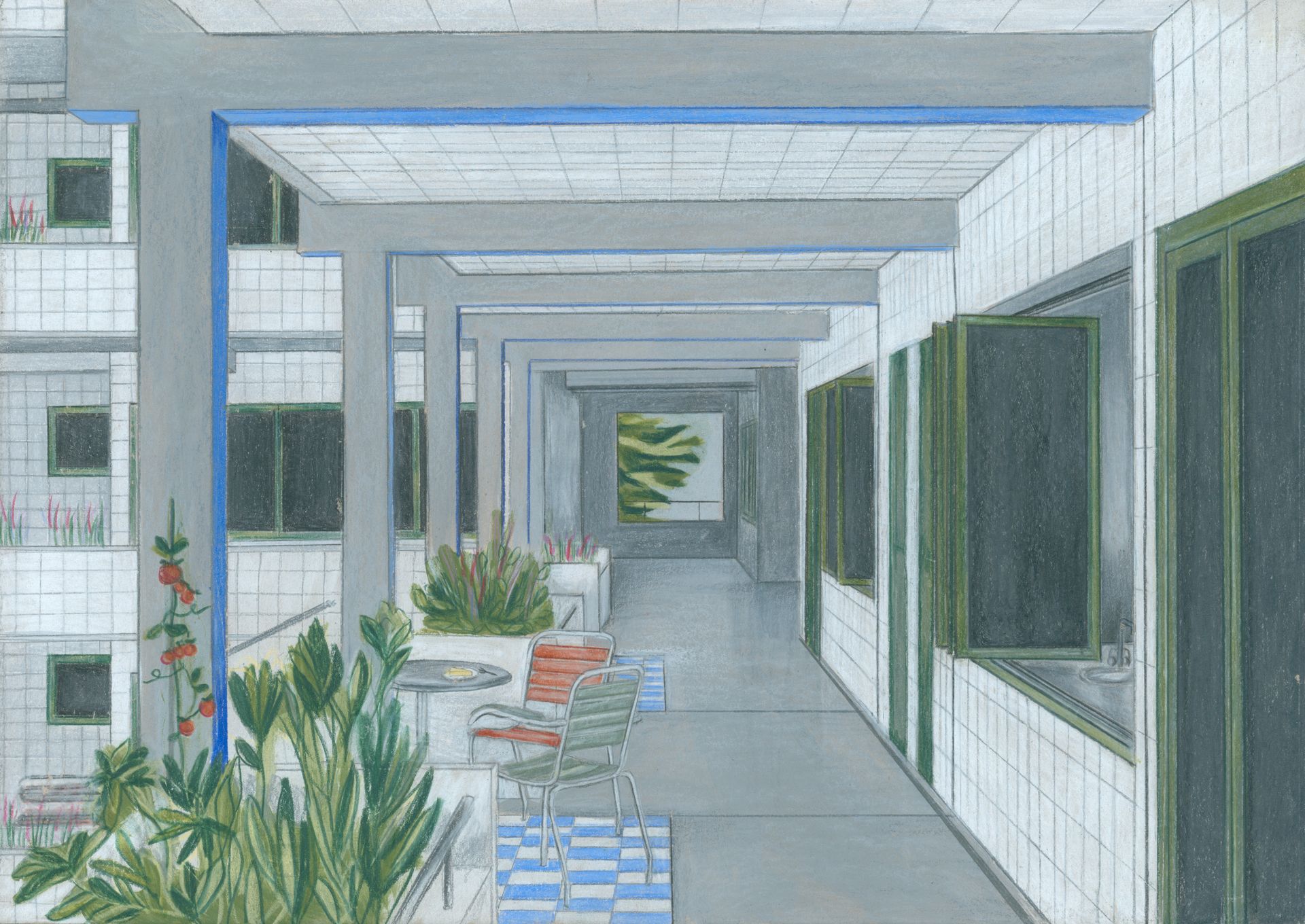
“Laubengang” view, 2023. Pencil on paper, 210 × 297 mm
Life on the Access Gallery
Collective life unfolds in the courtyard, on the roof, and along the green alley. The building is accessed via three stair cores and a system of access galleries. All shared spaces within the apartments are oriented toward the gallery, ensuring that every resident takes part in the communal courtyard life. Outdoor areas, kitchen living spaces, and the combination rooms are therefore consistently aligned with the courtyard.
The outdoor areas are conceived as front gardens as extensions of the access gallery. The kitchen living spaces form the social heart and point of arrival of each apartment. Acting as a first layer of transition between gallery and dwelling, the kitchen units provide a subtle threshold. On warm days, the kitchens open fully onto the gallery and expand into outdoor kitchens. Concealed behind the wardrobe to Narnia, the children’s rooms and bedrooms remain private retreats and are consistently turned away from the collective sphere.
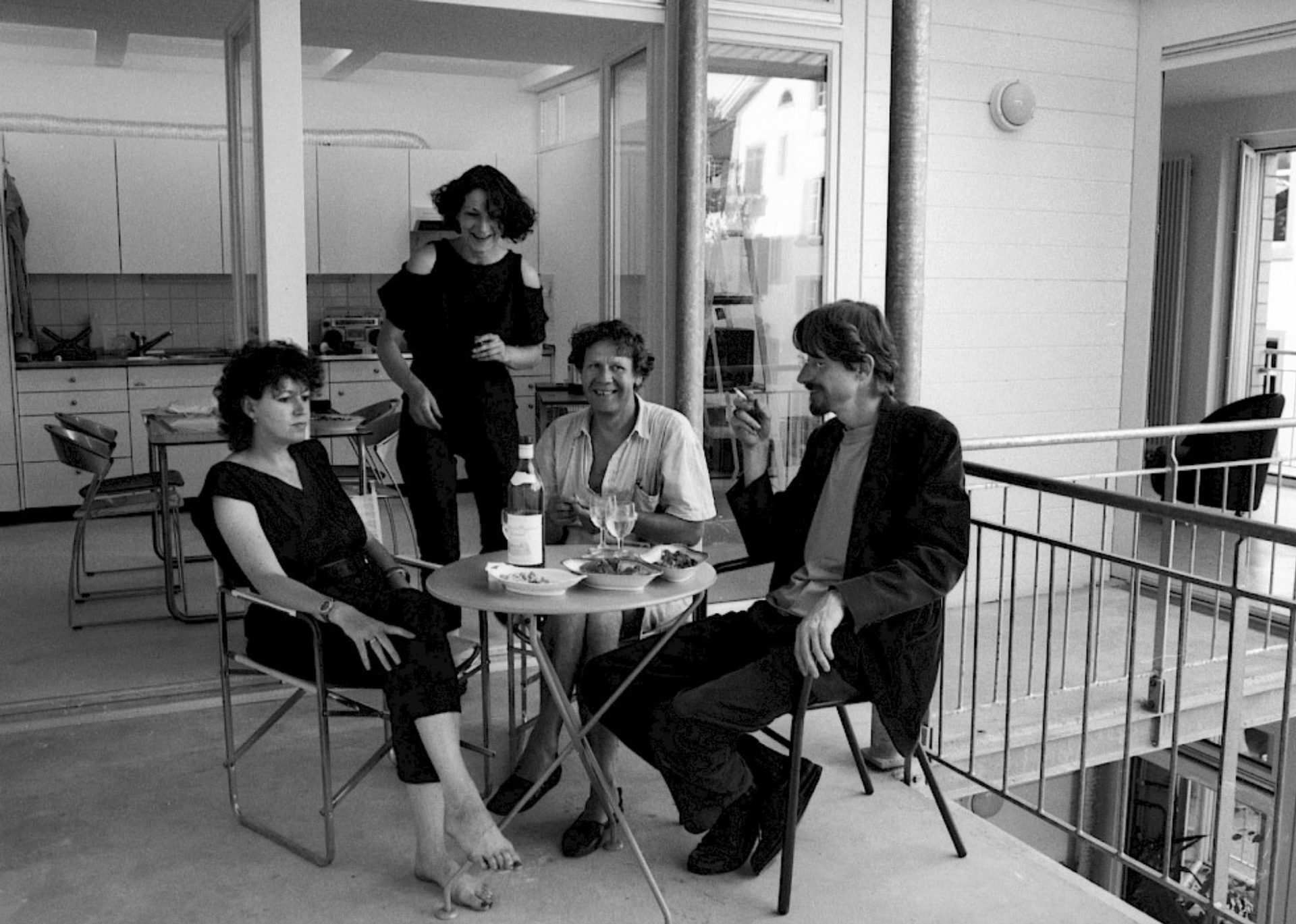
Überbauung Hellmutstrasse, Zürich
© A.D.P. Walter Ramseier / Beatrice Ljaskowsky
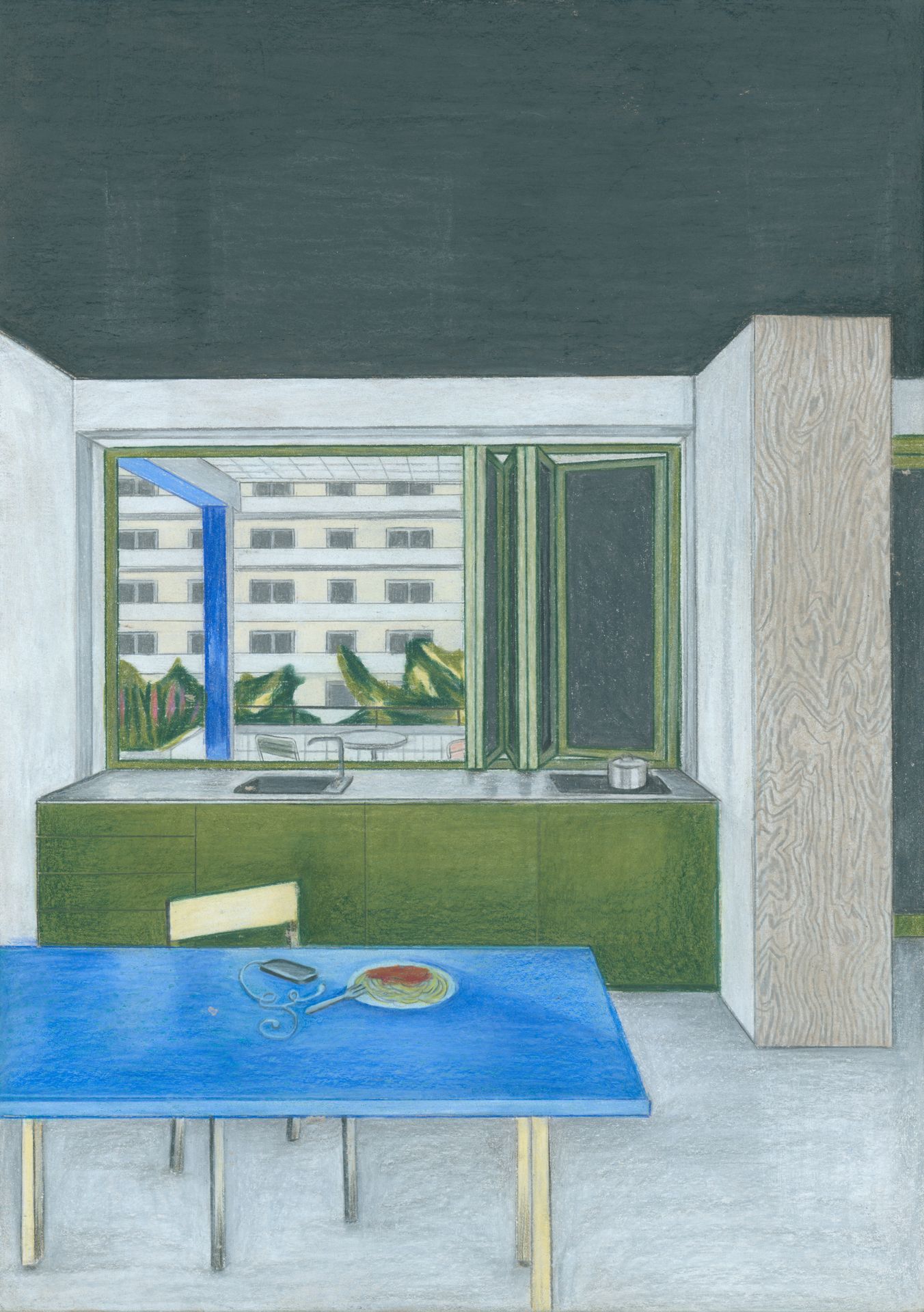
kitchen view, 2023. Pencil on paper, 210 × 297 mm

elevation north

elevation east