05
Mahnmal St. Nikolai
Mahnmal St. Nikolai
2025
open competition
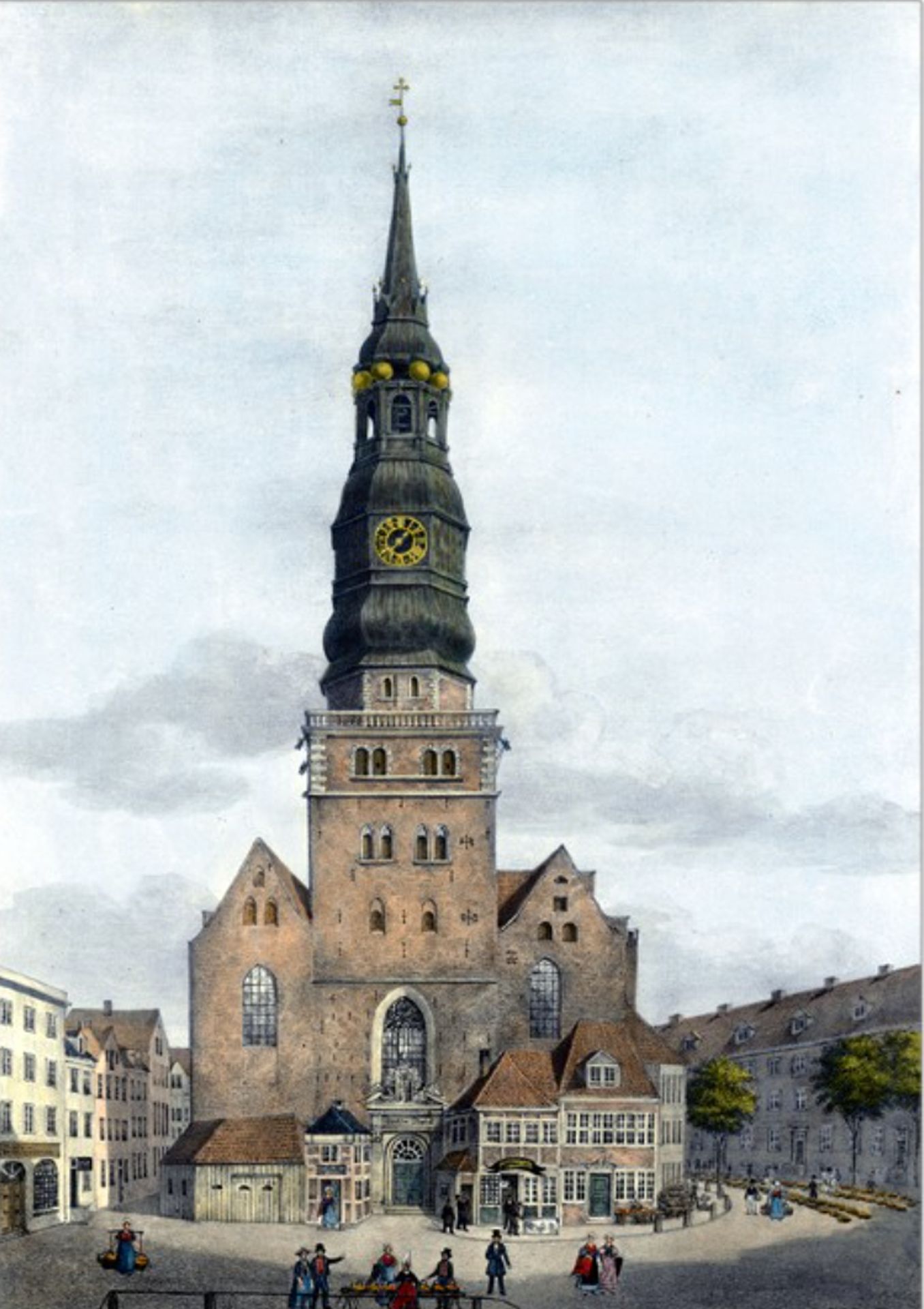
historic image of St. Nikolai
“Auf der Mauer, auf der Lauer”
No Crypt Meetings
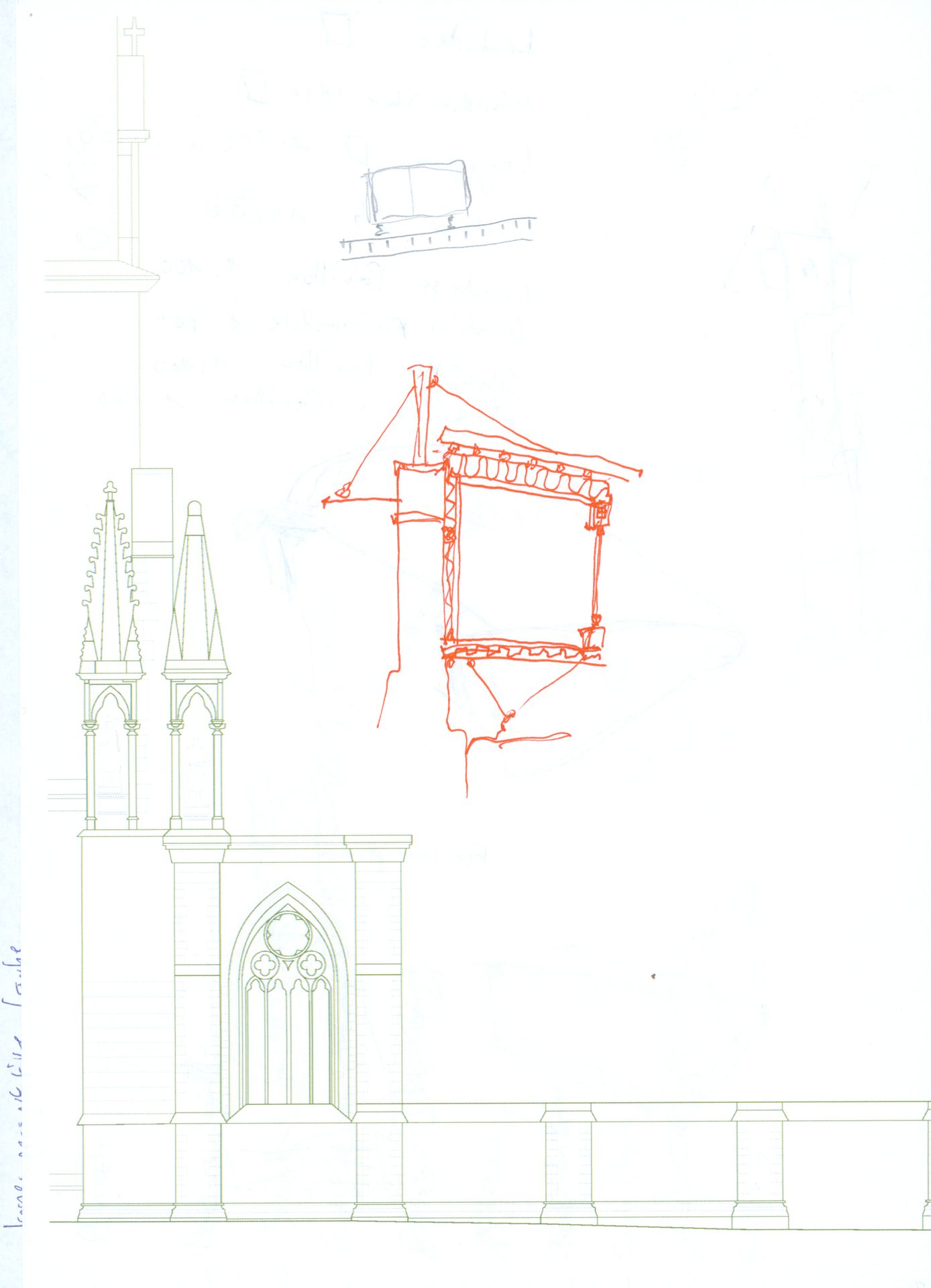
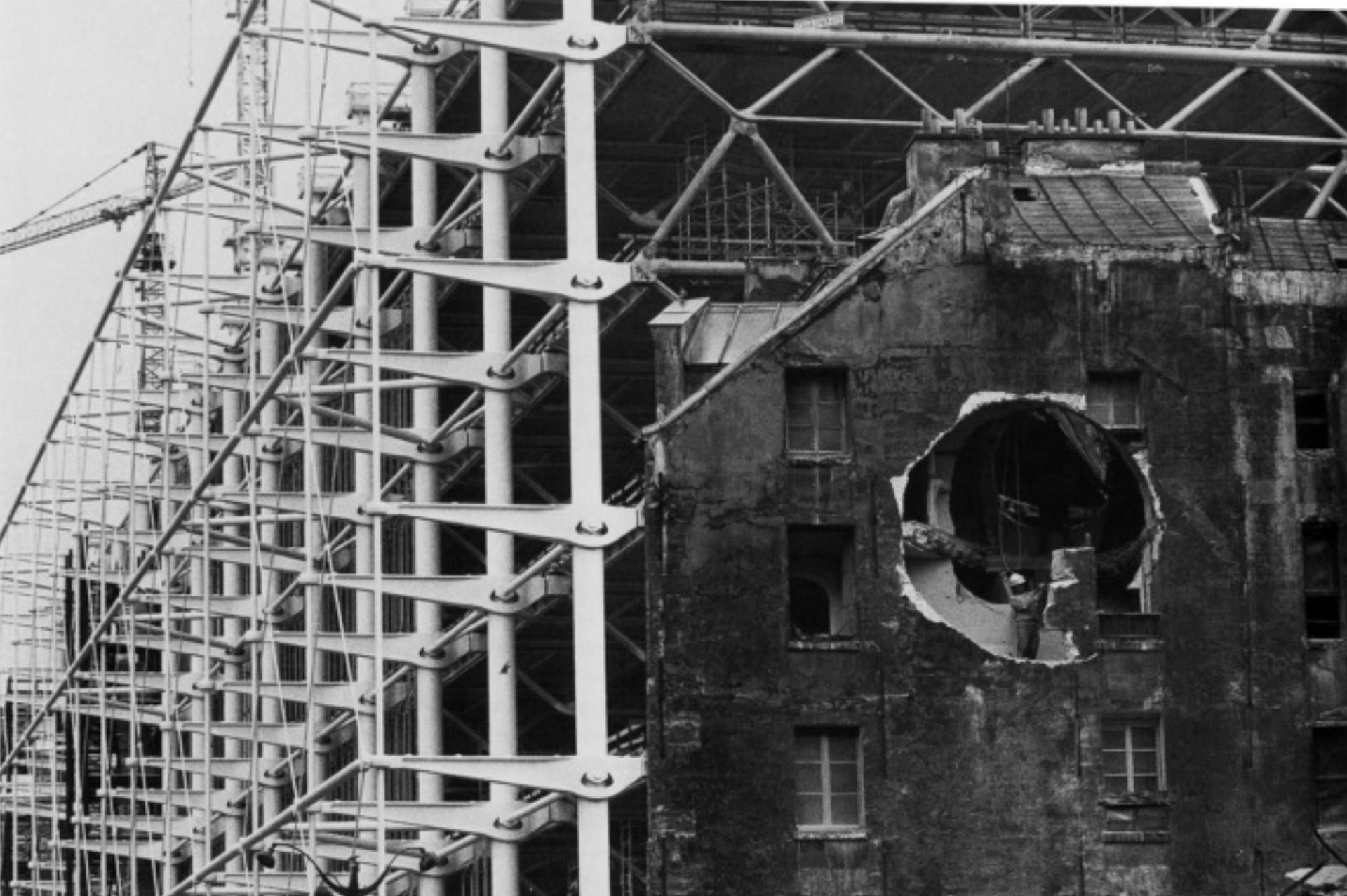
Who wants to sit in a basement when the sun is shining outside? Since ambitious solutions were requested, we consider meeting rooms in a crypt to be inappropriate. Instead, as already announced in the competition title, we propose a comprehensive reorganization of the St. Nikolai memorial. We achieve this with a few, targeted interventions. We rely on simple structures supported by slender steel tubes. We dissolve the previous spatial concept of the memorial, as fragments were previously presented on pedestals, similar to how Cologne Cathedral was once placed on a platform or how the ruins of the Kaiser Wilhelm Memorial Church were exhibited. Our approach: to understand the ruin as a whole and create a place of tranquility and remembrance. The most important message for visitors: the ruins must be protected so that such destruction never happens again and ruins have always been protected with simple shelter structures with metal roofs.
Connection Between Old and New
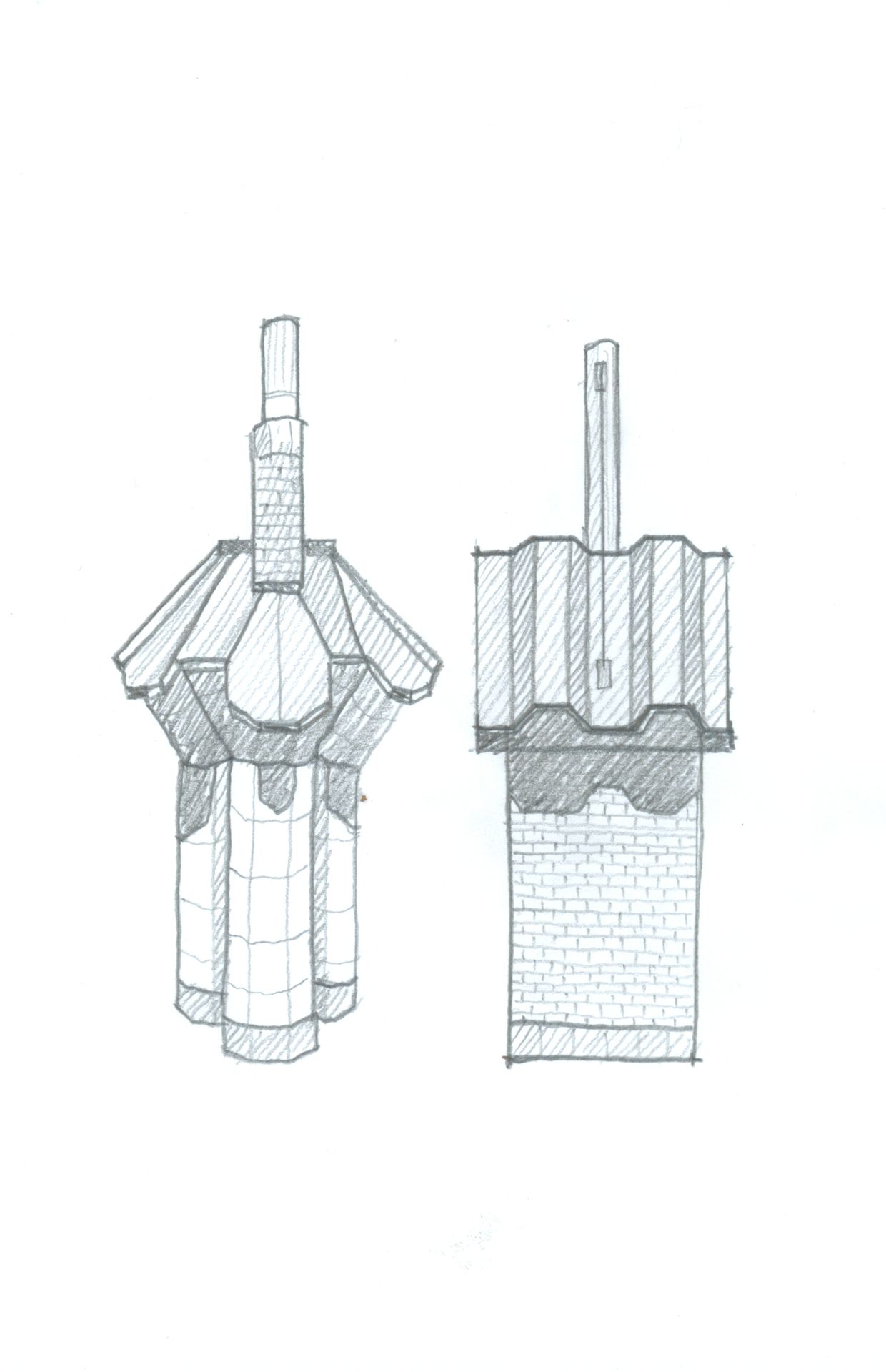
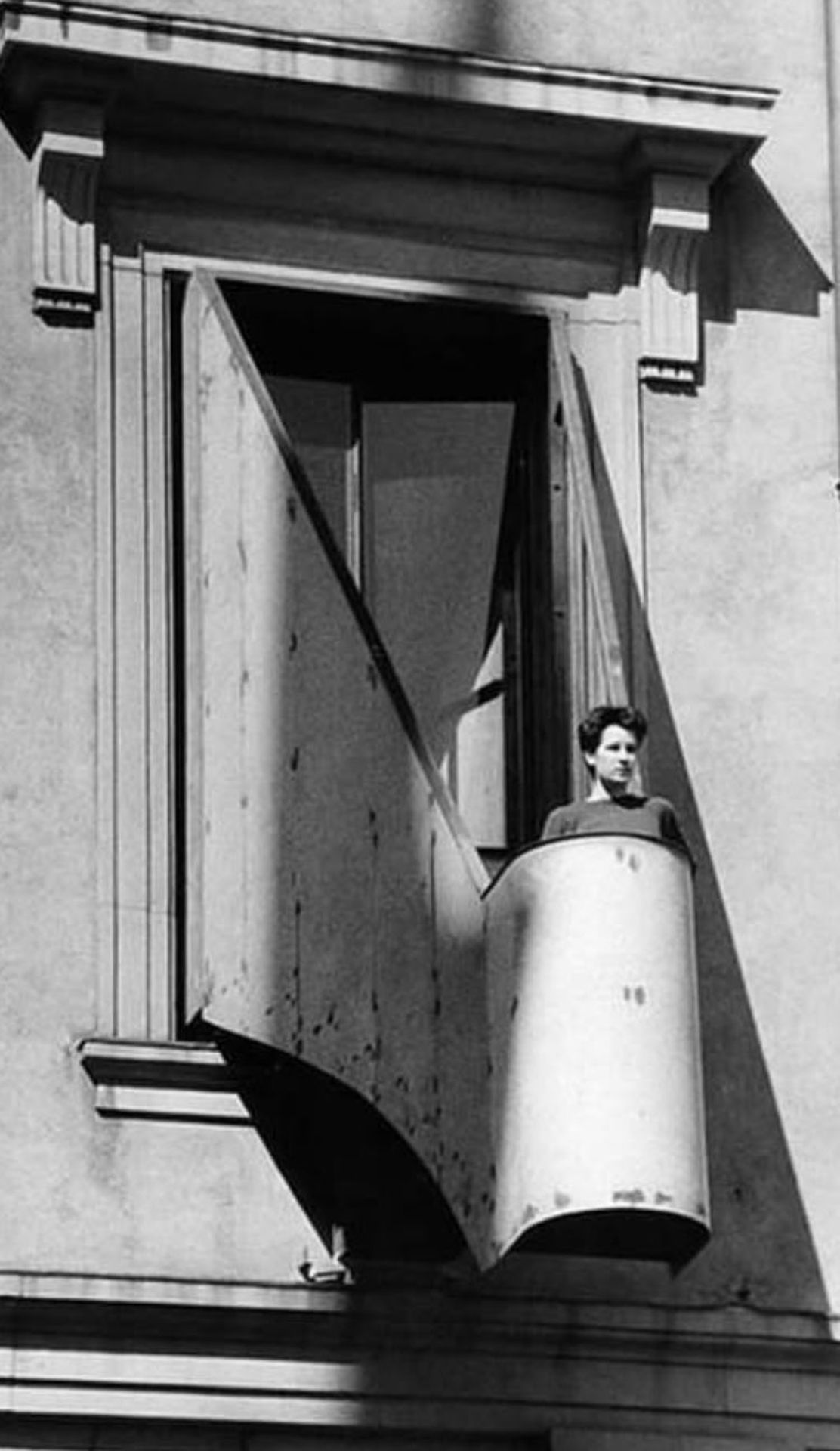
Old and new merge into a distinct whole: neither a church nor merely a fragment. Hans Döllgast created several examples of this approach in Munich, often working with old bricks and in dialogue with ruins of the Second World War. He succeeded in giving buildings a sense of unity despite their fractures. We appreciate the existing metal sheets on the wall remains of St. Nikolai, as they connect the old stones and create cohesion. The roofs of the new structures adopt this motif, creating unity between the fragments.
Heritage Preservation
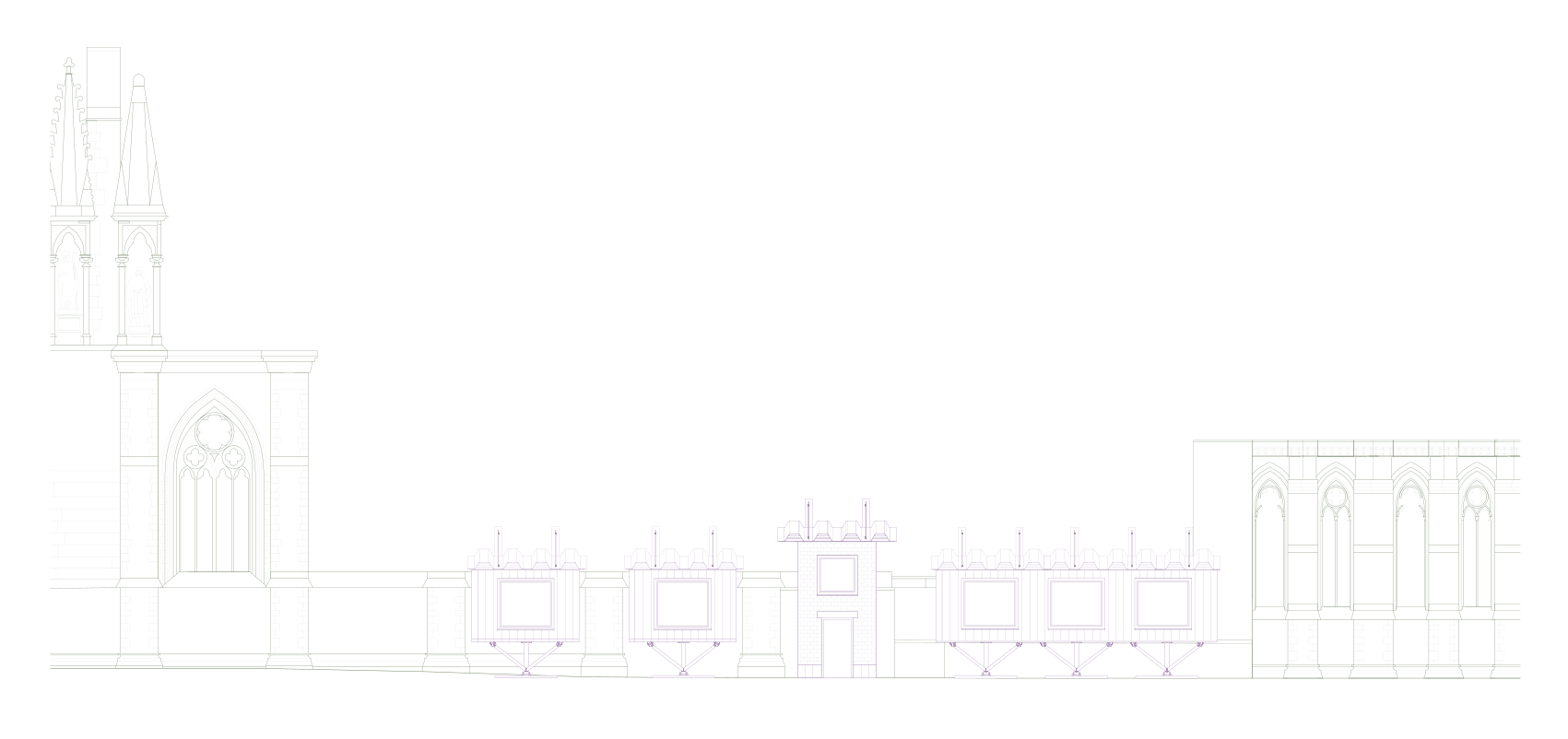
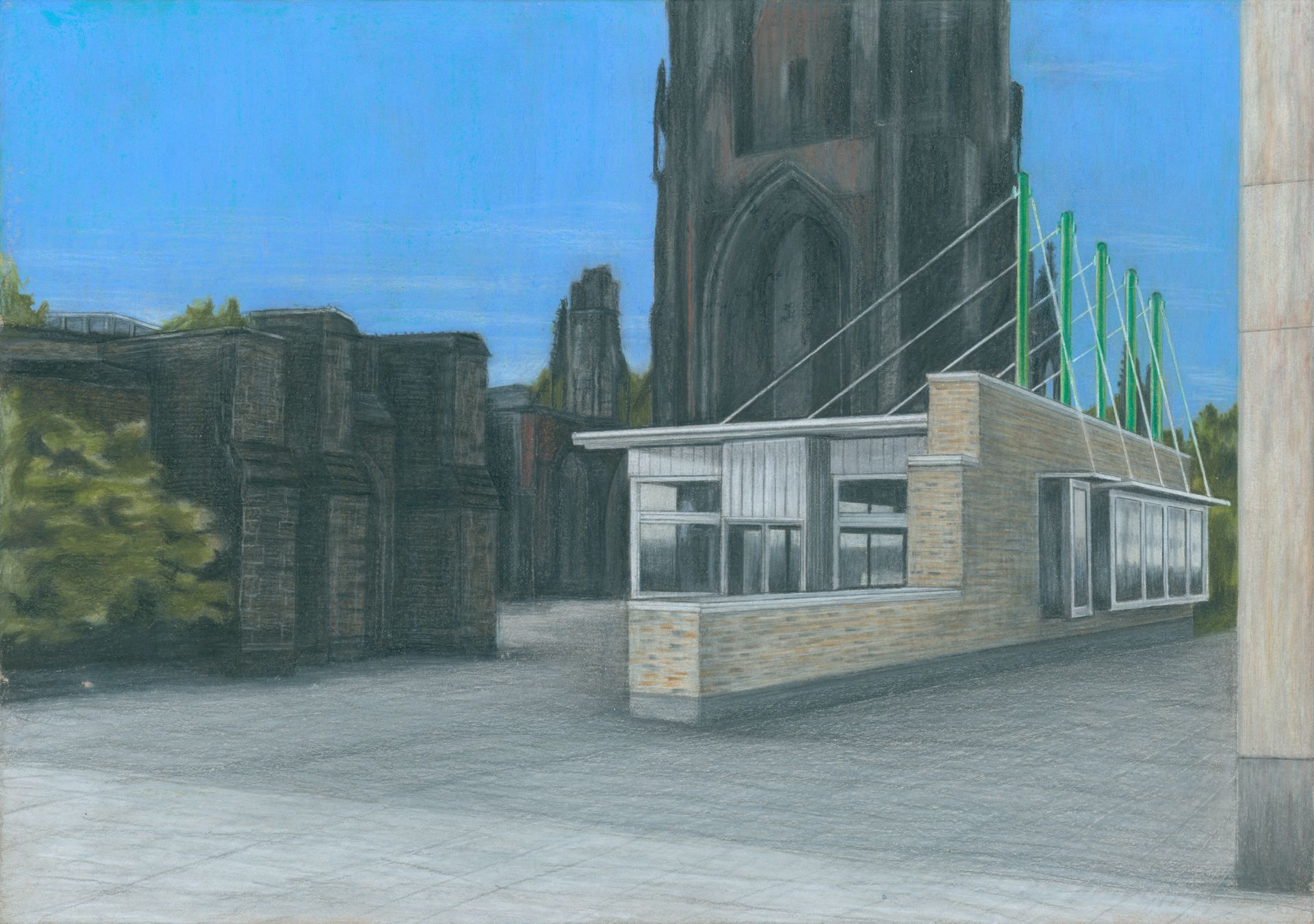
At St. Nikolai, the ruptures of Hamburg’s urban development history are visible, comparable to St. Alban in Cologne or Coventry Cathedral. Destruction, demolition, reconstruction, and repair all testify to the changing urban society and its relationship with the building. The planned redesign thus continues earlier interventions. It aims to treat the existing substance with respect and not to devalue the 19th-century church in favor of “authentic earlier structures.” Location, genius loci, and the history of destruction are all part of its value. We deliberately create an aesthetic contrast with the historical fabric, inspired by the principle of protective structures, such as the metal capping of wall crowns. The new buildings avoid imitation or reconstruction. They integrate as restrained auxiliary structures within the scale of the ruin. At the same time, to avoid strictly separating old and new, the new entrance pavilion is supported by a newly constructed brick wall.

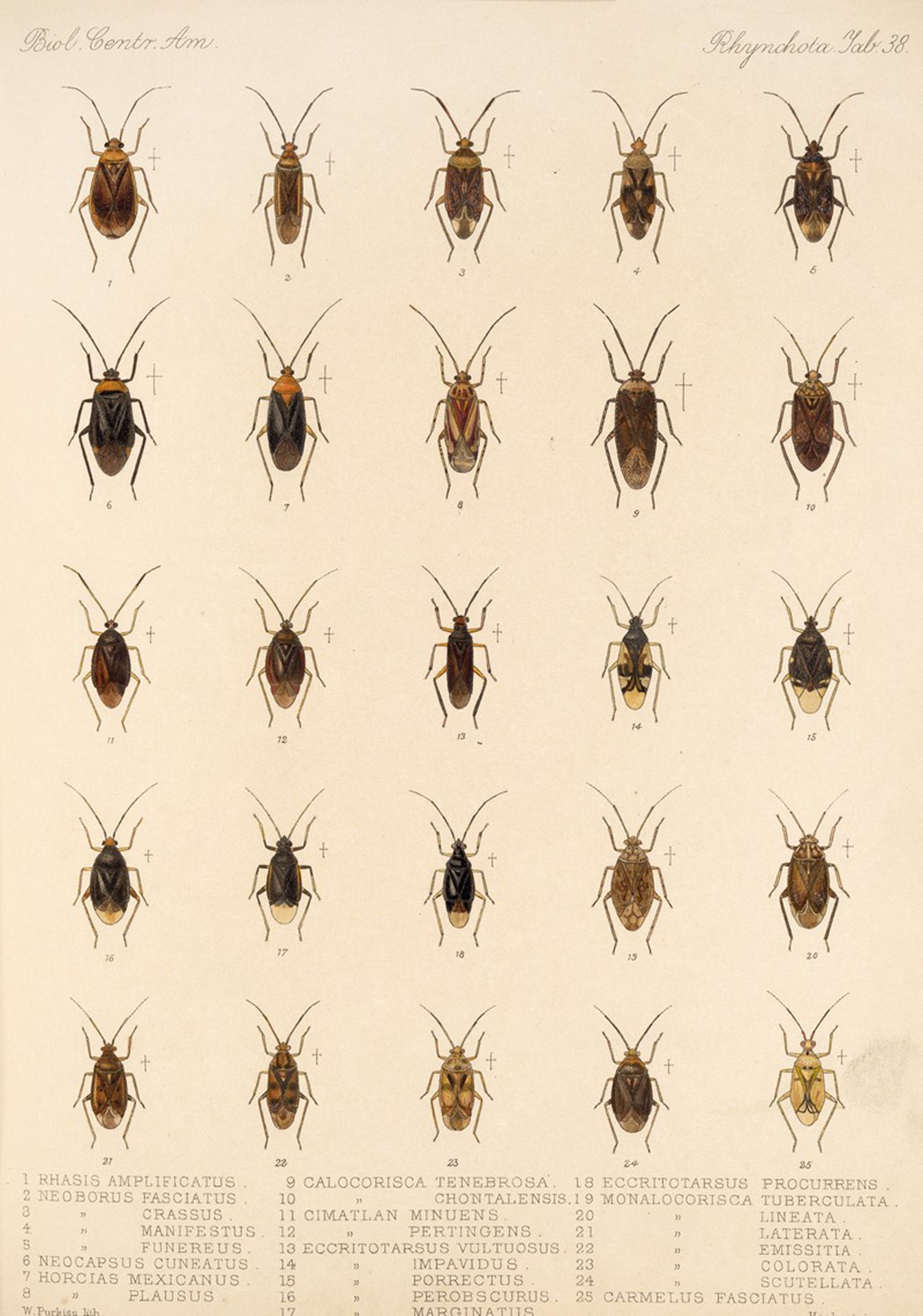
The Entrance Pavilion
The entrance pavilion does not strictly follow traditional conservation principles: we extend the wall remains of the eastern nave in a free interpretation. This raises the question: is it acceptable to continue building a ruin as a ruin? The entrance pavilion, with its metal-clad façade, is attached to the newly built wall. From the ticket counter, one has a clear view of everything: the tower elevator, the descent below, and the spatial modules on the wall.
Protecting Hidden Qualities
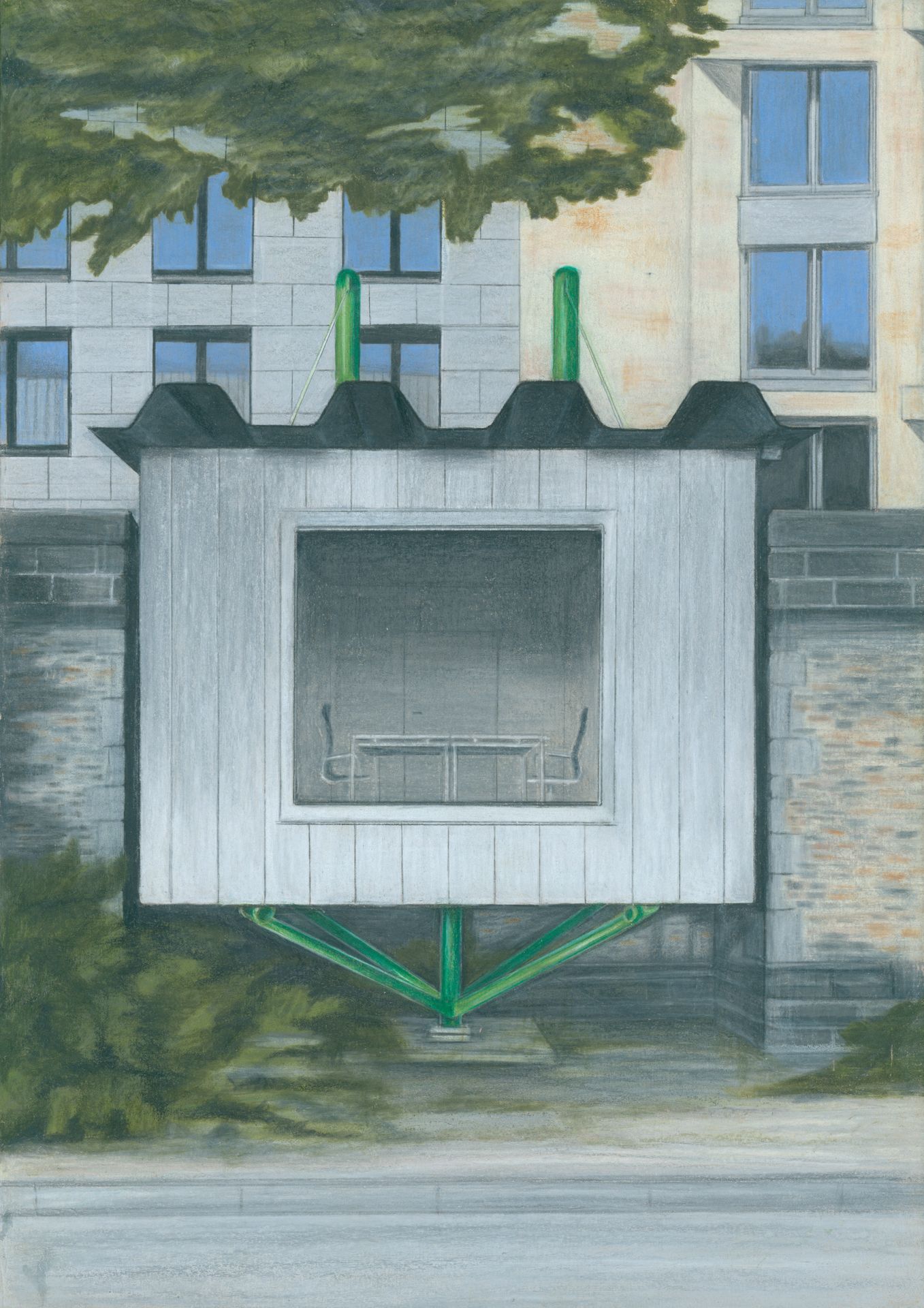
Historic basements and their spaces are valuable, therefore, the underground level remains largely open. Only in extreme heat, when one might prefer to retreat, are tables for meetings provided in the northern wing. Creative alternatives emerge in the niches of the buttresses: small structures reminiscent of historic lodges or market stalls that were once attached to churches until the 19th century, something that may also have existed at St. Nikolai. A breakthrough into the nave would once have been unthinkable today, given the open spatial structure and preservation of the remaining substance, it hardly carries weight. Materials found on site could even be reused.
The Object at the Center
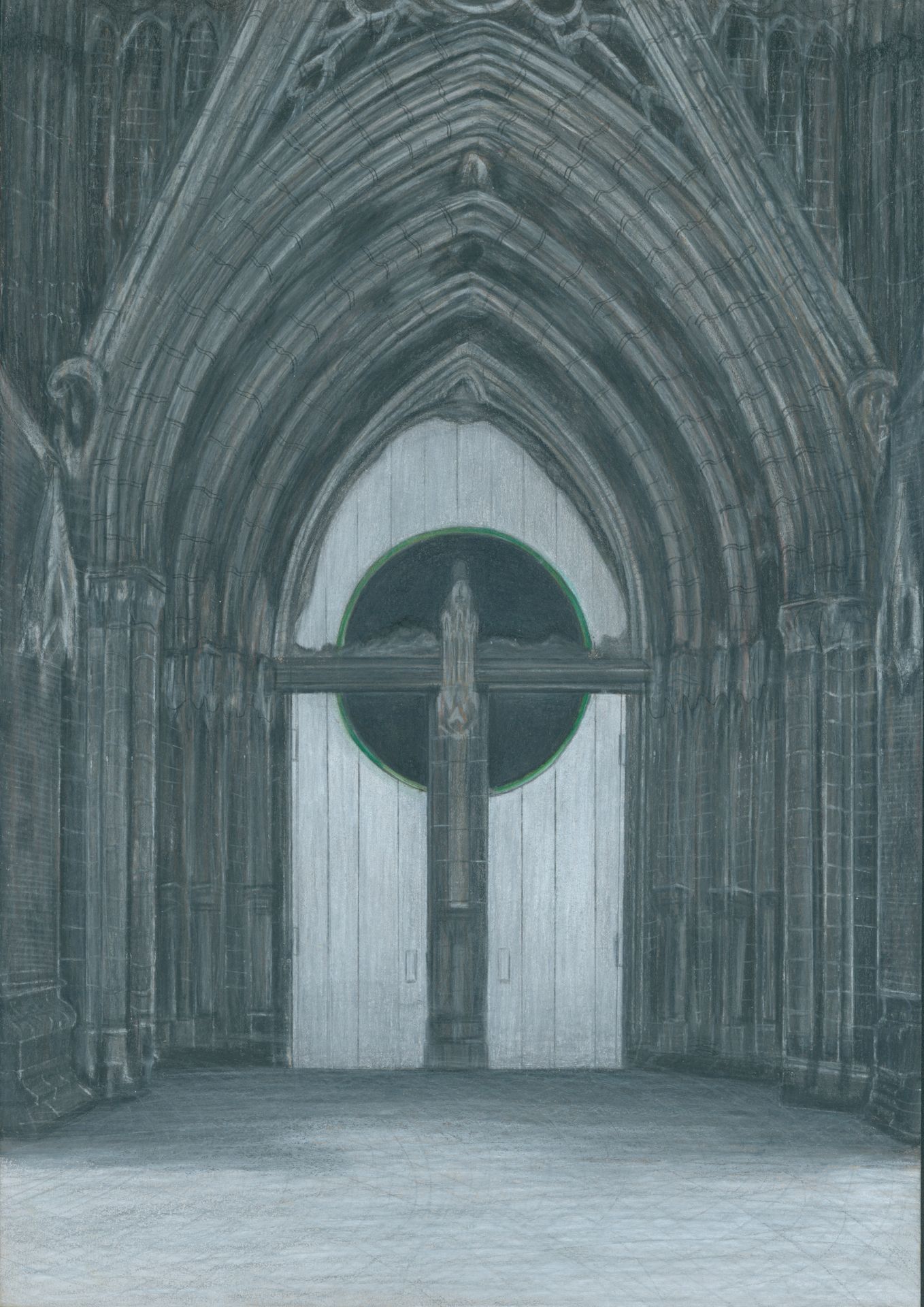
The elevator remains at the center, of course. The access control system will be modernized so visitors can move freely around the elevator tower. The west portal will be closed, as in many European churches. The north portal becomes a side chapel, where the „Weibliche Engel“ by Barbara Häger will receive a more dignified setting. Art and architecture reinforce one another. The artworks urgently need to be better aligned with the spaces, we have several suggestions. The central square will also be planted, encouraging visitors to circulate around it. Benches invite people to linger in this urban oasis. Rainwater collected on the plateau can be stored more effectively, helping to cool the area in summer.